Hossio, Serra d’Ossa: Alentejo wine, but not as we know it (partner feature)
It was early spring 2025 in Portugal. I’d spent a month exploring the vineyards and wine producers surrounding Évora, the capital of the broad and diverse Alentejo region. When – perhaps in an effort to work off some of the petiscos and wine I’d been indulging in – I took a hike in the Serra d’Ossa mountains. There were huge, gnarled cork trees, stripped of their bark, a whitewashed church at the top of a steep climb, two dogs who clearly felt they were the gatekeepers of the pathway, a stream that required sturdy footwear to cross after a particularly rainy March. I still have not only the photos, but the sense of accomplishment as we reached the top. This terrain was not the flat, sun-baked plains of Alentejo that I thought I knew. This was the Serra d’Ossa.
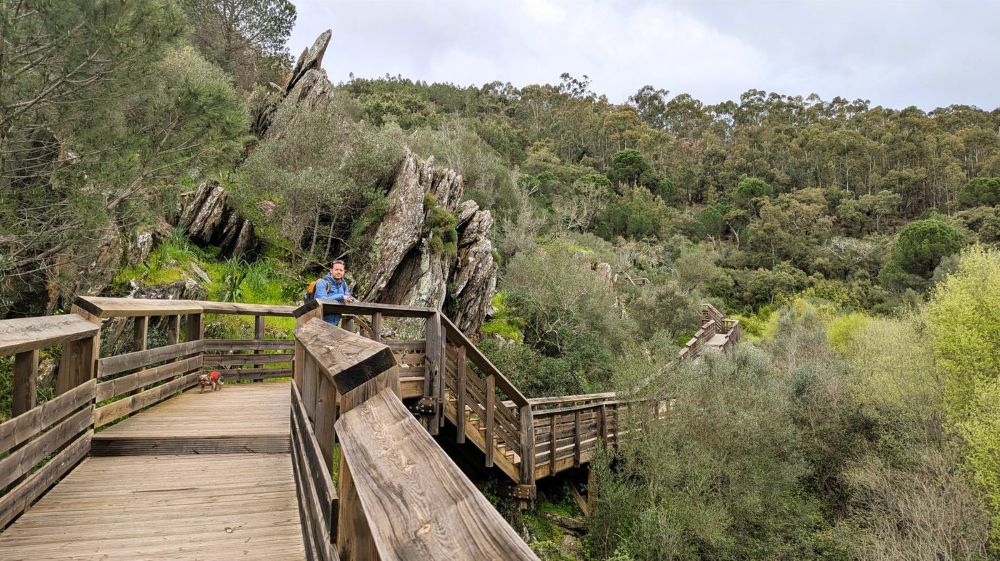
Reaching the summit of the Serra d’Ossa in Alentejo
Almost two years later, I received an email from a new Alentejan wine producer I’d not come across during that trip: Quinta do Hossio. When I looked up their location on the map, it felt rather like fate that we were in touch at all – I’d hiked right past their vineyards not long after they’d taken over the farm, while they were busy installing irrigation systems and watching their very first crop of grapes take shape. I was intrigued – both to hear their story and to taste their wines.
Finding the farm
Co-founders Rute and James Ferrier are a Portuguese-British couple who split their time between Alentejo and Surrey. Rute was born and raised in Lisbon, although her grandmother is from the Alentejo region and the family went back frequently to visit friends. “I’d been looking for a suitable quinta in the region for a few years,” says Rute, for whom (much like me) mid-life, covid and a WSET qualification coincided. “I wasn’t getting very far, until a friend of a friend showed me photos of the farm at Serra d’Ossa. I didn’t have high hopes, but once I saw the land I realised it had everything I was looking for: the right slopes, the right orientation, established vines with deep roots, a building that we could renovate as somewhere to live eventually.”
Although that renovation took two years and required everything from a new roof to an entire irrigation system, it quickly became apparent that the grapes themselves were excellent and abundant. A plan to sell the fruit to a cooperative changed into a decision to hire a winemaker and produce their very own vintage.
A grape by any other name
Planted on just 2.3 hectares, the vineyards combine Portugal’s flagship grape variety, Touriga Nacional, with an Alentejo staple, Aragonez. The latter is known as Tinta Roriz in the Douro and Dão regions of Portugal and as Tempranillo in Spain. And as anyone who’s ever tasted a classic Rioja or Douro Valley red will know, these are grapes famous for their full-bodied, heavy-hitting wines. The same is generally true in Alentejo: long, hot summers contribute to full sugar ripeness – a recipe for high-alcohol, powerful reds.
But while Rute and James may have started Hossio as a passion project, they clearly have a pragmatic head on their shoulders, too. “All signs point to people drinking less red wine – especially heavy reds,” explains Rute. “And the only category that’s growing is rosé.
Portuguese wines for today’s drinkers
That was the logic behind picking pink to start: Hossio’s rosé is pale coral in colour, speaking to the Provence rosé crowd, but has a body and mouthfeel that’s distinctly Alentejan. “Portuguese rosé had a bad reputation during the Mateus years,” Rute reminds me, “but now that tide has turned and there are some fantastic dry, elegant rosés coming out of Portugal. We want to be part of that movement.”
Having successfully brought out their inaugural 2024 vintage with Hossio’s rosé, in 2025 Rute decided to produce a red as well. But not a typical powerful Alentejo red blend. Hossio’s red is bright and red fruited, with some seasoned oak and very light tannins – it perfectly meets the demand for light, easy-drinking reds that can be slightly chilled and served with grilled veggies rather than red meat.
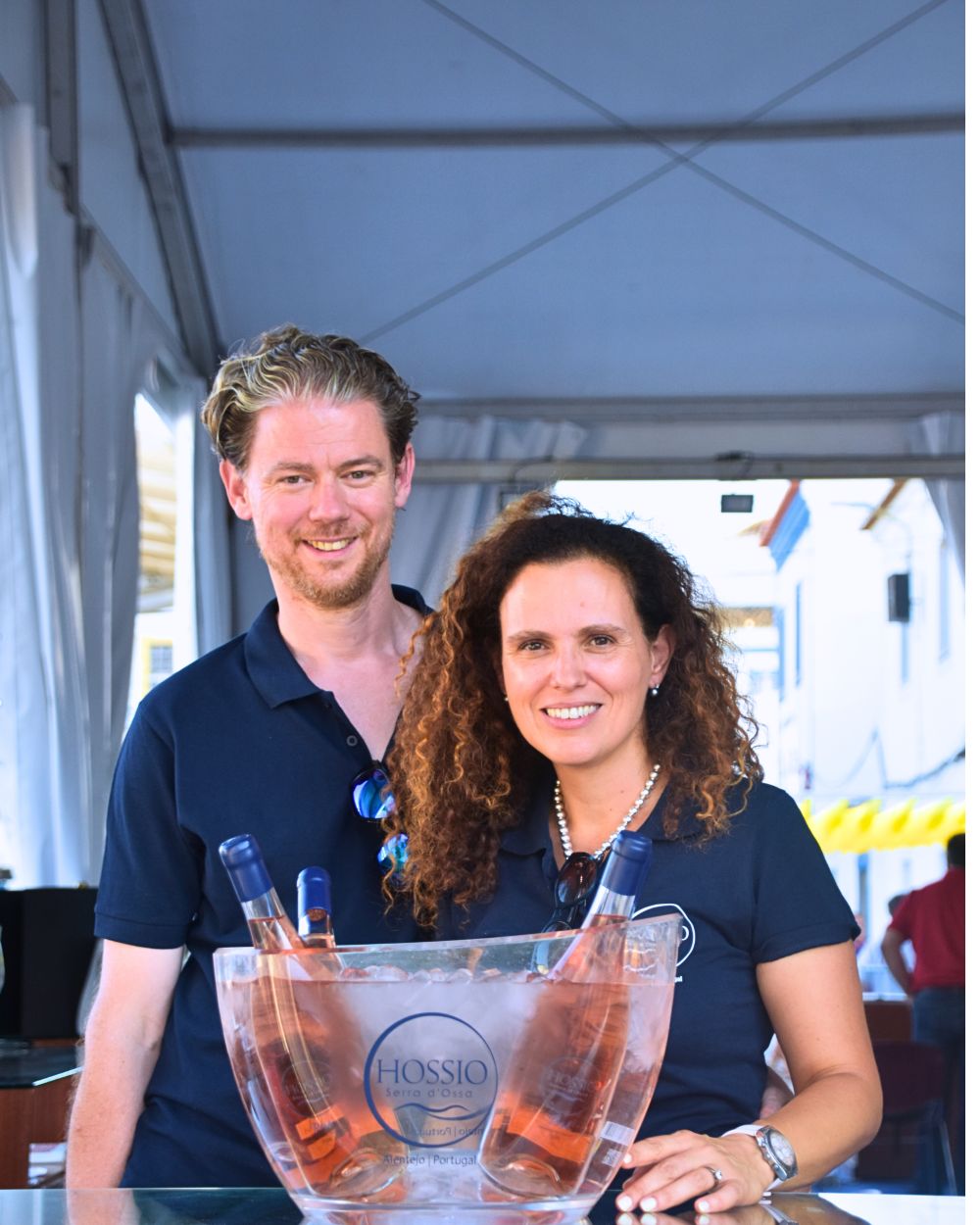
Rute and James Ferrier, Hossio’s founders
A work in progress
Rute is modest about the project so far: “we’re a very young producer, and we’re learning every year. It’s a work in progress, and we already have plans for other experiments we’d like to try next year. We harvest at night, ferment low and slow, and add as little sulphur as possible. But in future we’d like to use native yeasts and reduce intervention further. James is in charge of our sustainability efforts, and we’ve signed up for the Wines of Alentejo Sustainability Programme – planting cover crops and encouraging biodiversity so we can reduce our reliance on irrigation. We plan to live on this land ourselves one day, so we need to look after it.”
It’s clear throughout our entire conversation that Hossio is a very personal project. So I ask Rute why the name Hossio? “It’s Latin for Serra d’Ossa,” she explains. “And the Portuguese word ócio is informally used to mean relaxation or idleness. We want our wines to reflect that sense of leisure – a moment to relax and have fun.” And on that note, it’s time to taste!
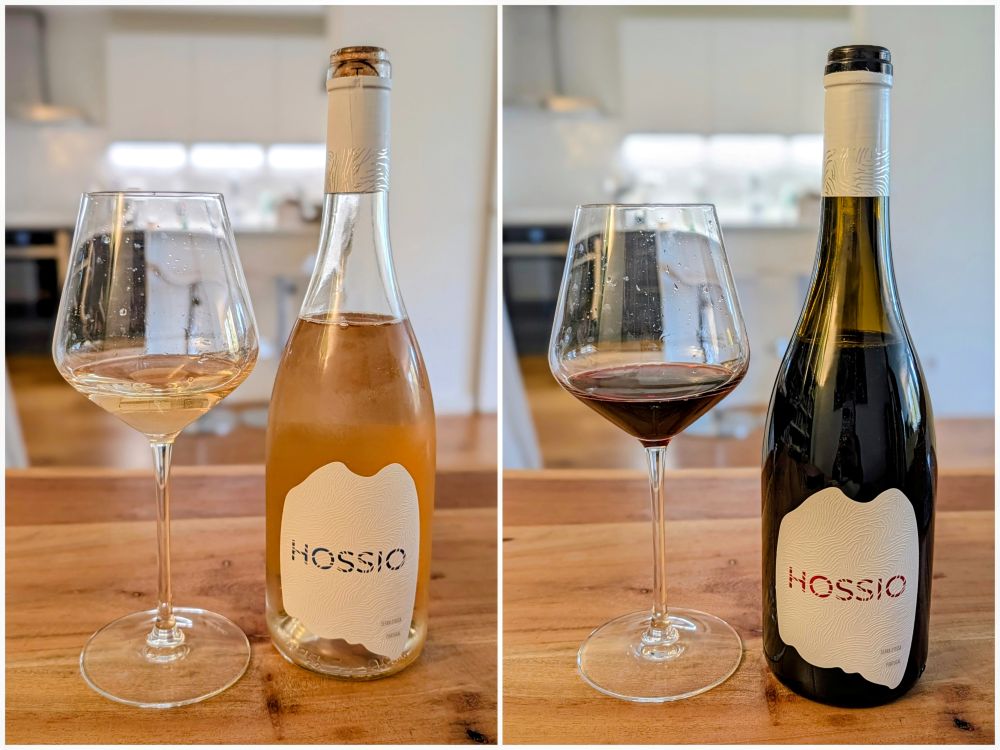
On the tasting table: Hossio rosé and red
My tasting notes
- Hossio rosé 2025 – cool and mineral, like a stream flowing over rock, grapefruit and watermelon, crisp acidity, elegant length
- Hossio red 2025 – red cherry, pomegranate, cranberry, bay leaf and a touch of candy, light and crushable
Availability
Hossio’s wines are available in the UK and the EU via their website, at around €22 or £24 per bottle. Exact pricing depends on location and number of bottles ordered – contact Hossio for details.
This feature is brought to you in partnership with Hossio, and is part of a paid collaboration. For more on Portuguese wines, see my guides to Alentejo, the Douro Valley, the Algarve and the Azores.